From Colonial Town to Innovative Powerhouse: Medellín, the Story of a Pioneering City
- Written by: SETTLING IN
- 6 October, 2025
- Comments: (0)
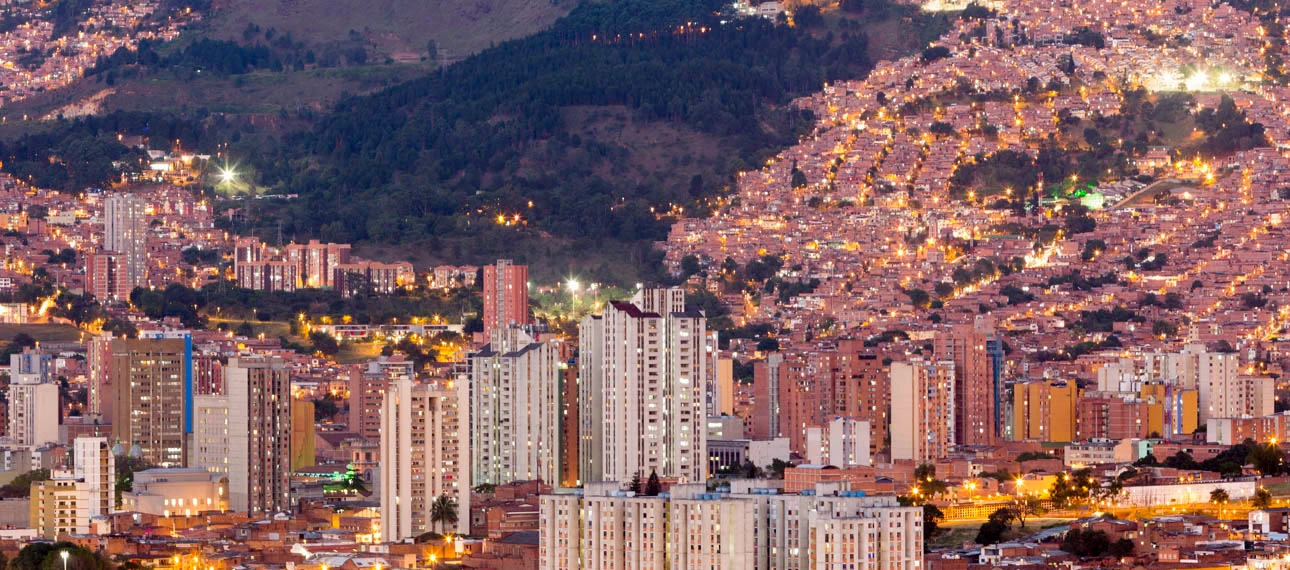
Imagine a peaceful valley in the 17th century, where cows outnumbered people and the most exciting event was a caravan of mules loaded with sacks of corn. Fast forward a few centuries and you find Medellín, Colombia’s second-largest city and one of Latin America’s leading centers of innovation. Quite the ride, right?
Spanish explorers spotted the Aburrá Valley in 1541, but it wasn’t until 1616 that they established a small settlement called San Lorenzo de Aburrá. In 1675, the Villa de Nuestra Señora de la Candelaria de Medellín was officially born. Its name? A tribute to Medellín, Spain, courtesy of a nobleman who had friends in Madrid.
For most of the colonial era, Medellín was a modest cattle town on the trade route between Santa Fe de Antioquia and the Magdalena River. Mule drivers passed through with their gold, tobacco, leather and stubborn determination. But location matters. By 1826, Medellín had become the capital of Antioquia.
Coffee, Trade, and the Paisa Push Forward
In the 19th century, coffee was king. The so-called Antioqueña colonization sent paisas south to establish new towns and coffee farms. That wealth flowed back into Medellín. By 1900, the city was Colombia’s textile and financial capital. Hydroelectric power, no feudal landowners, and a culture of small property ownership turned Medellín into the country’s industrial jewel.
Throughout the 20th century, Medellín became the economic engine of Colombia. Textile giants like Coltejer and Fabricato, food legends like Noel and Chocolates, and megabanks like Bancolombia were born here. Yes, the 1980s brought dark times with drug trafficking, but paisa resilience prevailed. In 1995 the metro opened, the only one in Colombia, and Medellín pioneered urban design with libraries, escalators, cable cars and green corridors.
The Culture Behind the Innovation
Who are the paisas? Ask anyone in Colombia and the answer will be: hard-working, proud, business-savvy. Geography explains a lot. The mountains of Antioquia prevented large estates and aristocracy. Everyone had to contribute, and that shaped a culture of ambition and self-improvement. Isolation also played a role: they had to be persevering because there was no other option.
Genetic studies show paisas have around 71 percent European ancestry, the highest in Colombia, with many families linked to Sephardic Jewish roots. Add Catholic values of discipline and a touch of stubbornness and you get a culture that reveres hard work and innovation.
There’s a famous saying here: “Si Antioquia resiste, Colombia se salva.” Translation? If Antioquia resists, Colombia is safe. It comes from the 19th century, when Antioquia was seen as the backbone of the country in times of crisis. With its mountains, tough muleteers, and hard-working people, Antioquia symbolized strength and resilience. If paisas kept pushing forward, the whole nation could survive the storm. It’s not about arrogance, it’s about identity. That’s why the phrase still lives on today as a reminder that Antioquia’s energy pulls Colombia along.
The Business Spirit that Built a Powerhouse
Medellín is home to Colombia’s most powerful economic groups. The Antioqueño Business Group (GEA) includes giants like Sura in insurance, Nutresa in food, and Argos in cement. The country’s largest bank, Bancolombia, was born here too. What made Antioquia different? Instead of spending coffee wealth on luxury mansions, paisas reinvested in industry. They created Empresas Públicas de Medellín (EPM), one of Latin America’s leading public utility companies, and turned Ruta N into a Silicon Valley-style innovation hub.
Paisa pride is real. Not every Antioquian is a business genius, but the results speak for themselves: Medellín is one of Colombia’s most competitive, creative and admired cities. From colonial mule trails to global recognition, the paisa story is one of resilience, inventiveness and a little bit of arrogance. Or as locals like to say: forward, never backward, not even to gain momentum.
Why This Matters to You as a Nomad or Retiree?
History is not just a nice story. It explains why Medellín feels so unique today. The same resilience that helped paisas survive isolation is what created the modern culture of entrepreneurship, innovation, and service. That is why digital nomads and retirees who move here often say the same thing: people are helpful, resourceful and always ready to connect.
If you want to know what living here feels like today, don’t miss our practical guides. We prepared them especially for expats like you: